How to start day trading from scratch and build a repeatable process with one simple setup
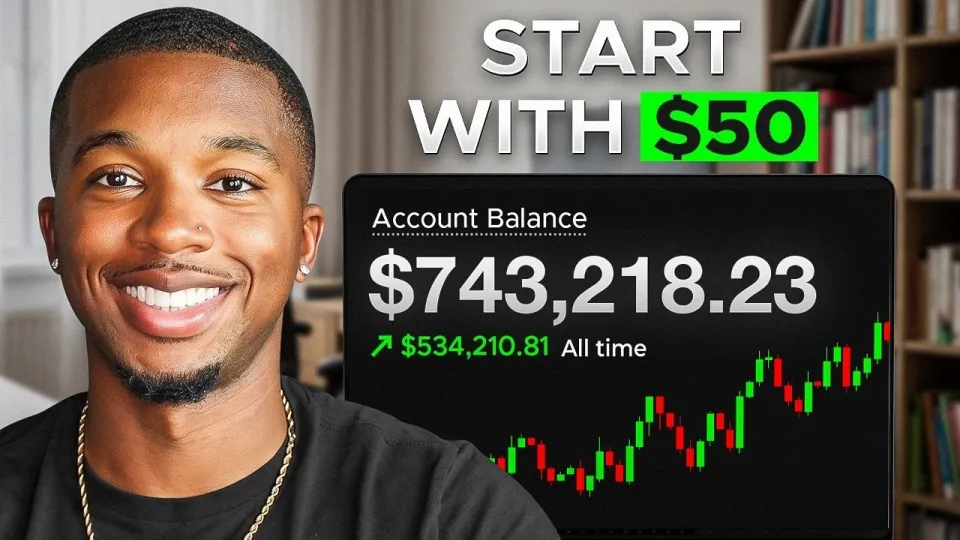
Video: Easiest Way To Start Day Trading From Scratch (Exactly What I Did)
Need articles like this for your video? They help promote it on YouTube and Google — order them in the Telegram bot @sat_sit_bot. Articles with your video embedded are written and posted by the bot itself — on popular topical sites (no ads). Your first 50 articles are free.
· based on the channel Jooviers Gems
Day trading from scratch is a learnable process, not a talent: pick one setup, risk a fixed small amount per trade, trade only the first 60–90 minutes of the New York session, and log every trade in a journal for at least three months on a demo account before going live. That is the exact framework Jooviers Gems walks through in the video “Easiest Way To Start Day Trading From Scratch (Exactly What I Did)”, and it is the same path that most consistently funded retail traders follow. If you want to see the trades and the full process in real time, the channel points beginners to its Inner Circle, where members get every trade posted.
What day trading actually is and why most beginners quit
Day trading means opening and closing positions within the same session, so you never hold overnight risk. The appeal is obvious: no boss, no commute, and the ability to trade from a laptop. The reality is that the edge comes from repetition and risk control, not from prediction. Most beginners quit within the first six months because they trade too many setups, size too large, and treat a losing day as a personal failure rather than a data point. The traders who survive treat it like a small business: fixed hours, fixed risk, and a written plan.
Start with one setup, not ten indicators
A single repeatable setup beats a screen full of indicators because you can actually measure it. The most beginner-friendly setup for futures and forex is the opening range breakout: mark the high and low of the first 15 minutes of the New York session, then trade the break of that range in the direction of the break, with a stop on the opposite side. On NQ (Nasdaq 100 futures) and ES (S&P 500 futures), the first 60–90 minutes typically produce the widest ranges and the cleanest moves of the day. One setup, one market, one session — that is the entire starting point.
Risk rules that keep a small account alive
Risk control is the part that decides whether you are still trading in a year. Use these numbers as defaults and adjust only after you have 100+ logged trades:
- Risk 0.5–1% of the account per trade. On a $10,000 demo that is $50–$100 of risk per trade.
- Set a daily stop of 2–3% and walk away when you hit it — no revenge trades.
- Use a fixed stop-loss in ticks or points, never a mental stop.
- Take partial profits at 1R and let the rest run to 2R or trail it.
- Never add to a losing position; averaging down is how small accounts die.
How prop firm funding changes the math for beginners
Prop firm evaluations let you trade someone else’s capital for a fee, which removes the pressure of risking your own savings while you build a track record. A typical evaluation asks for a profit target of 6–10% with a maximum daily loss of 4–5% and an overall drawdown limit, and it usually requires consistency — no single day can make up most of your profit. Pass the evaluation and you get a funded account with a profit split, often 80–90% to you. The catch is that the rules are strict: one oversized trade can end the account, so the same 0.5–1% risk rule applies. The channel behind the video links to The Edge Funder as its funding partner, and there is a Discord community where traders compare evaluations and setups.
A 90-day practice plan before you risk real money
Three months of structured practice is enough to know whether your setup has an edge. Structure it like this:
- Month 1 — watch the market live every day, mark the opening range, and write down what you would have done without placing the trade.
- Month 2 — take those trades on a demo account, one setup only, and log every entry, exit, and R multiple.
- Month 3 — review the journal weekly, keep only the conditions where your win rate and average R are positive, and drop everything else.
A simple journal is enough; the channel recommends Wagmi Trader (code WAGMI) for tracking, but a spreadsheet with columns for date, setup, entry, stop, target, R multiple, and one sentence on execution works just as well. The goal is not a perfect month — it is 100 trades of clean data you can actually learn from.
Common beginner questions and mistakes
Beginners consistently run into the same five problems, and each has a straightforward fix.
- “I don’t have enough money to start.” You don’t need much — a demo account costs nothing, and a small live account or a prop firm evaluation can be started for a few hundred dollars.
- “I keep blowing up my account.” That is almost always position sizing, not strategy. Cut risk per trade to 0.5% until you have 50 consecutive logged trades.
- “Which market should I trade?” Pick one liquid market — NQ, ES, or a major forex pair like EUR/USD — and ignore everything else for the first six months.
- “How long until I’m profitable?” Expect 6–12 months of consistent screen time; the viewers who report progress in the comments describe months of demo trading and backtesting before seeing results.
- “Should I buy a course?” A structured course can save time, but only if it teaches risk management and journaling, not just entries. Many beginners say they learned more from free, well-explained videos than from a paid week-long course.
Useful links
- Inner Circle — every trade posted
- The Edge Funder — instant funding
- The Edge Funder Discord community
- Joovier on Instagram
- Recommended forex broker
The bottom line on starting from scratch
Starting day trading from scratch is a process of subtraction: one setup, one market, one session, one fixed risk per trade. The traders who make it are not the ones with the most indicators — they are the ones who log 100 trades, review them honestly, and keep the risk small enough to survive the learning curve. The video by Jooviers Gems is a solid starting point because it shows both the wins and the reality behind them, which is exactly what beginners need to see. If you want to follow the process trade by trade, join the Inner Circle and start with a demo account today, not next month.
Key takeaways
- Beginners should master one setup (e.g., opening range breakout on NQ or ES futures) before adding anything else.
- Risk 0.5–1% of the account per trade; on a $10,000 demo that is $50–$100 per trade.
- Trade the first 60–90 minutes of the New York session when volume and ranges are highest.
- Prop firm evaluations typically require a profit target (often 6–10%) with a max daily loss (often 4–5%).
- Journal every trade: screenshot, setup grade, R multiple, and one sentence on execution.
Source: Easiest Way To Start Day Trading From Scratch (Exactly What I Did) · Markdown version
Questions & answers
How much money do I need to start day trading?
You can start with a demo account for free, and a small live account or a prop firm evaluation can be started for a few hundred dollars. What matters more than the starting balance is risking 0.5–1% per trade, so a $500 account means $2.50–$5 of risk per trade.
How long does it take to become profitable?
Most traders need 6–12 months of consistent screen time, demo trading, and journaling before results stabilize. A realistic first milestone is 100 logged trades with a positive average R multiple, not a specific dollar amount.
Is prop firm funding worth it for beginners?
It can be, because you trade the firm’s capital instead of your own savings while building a track record. The trade-off is strict rules: a typical evaluation has a 6–10% profit target, a 4–5% max daily loss, and consistency requirements, so one oversized trade can end the account.
Which market is easiest for a beginner day trader?
One liquid market is enough: NQ or ES futures, or a major forex pair like EUR/USD. Stick to the first 60–90 minutes of the New York session, when volume and ranges are highest, and ignore everything else for the first six months.